Buying a used car online changes the game compared to visiting a dealership. You can access thousands of listings in just a few clicks, compare prices without sales pressure, and filter by engine type, mileage, or year. The downside: it’s impossible to walk around the vehicle, listen to the engine, or feel the condition of the brakes before heading out.
Check the history of a used vehicle before going out
You’ve spotted a listing that ticks all the boxes. The price fits your budget, the mileage seems reasonable, and the photos are flattering. Before contacting the seller, a reflex can save you from a very unpleasant surprise: check the HistoVec report with the registration number.
HistoVec is a free public service. It displays changes of ownership, declared insurance claims, mileage recorded during technical inspections, and the administrative status of the vehicle (lien, opposition, theft). A serious seller will readily share this report.
HistoVec does not provide a complete mechanical history. Repairs done outside of insurance, regular maintenance, or work performed abroad are not included. To complete the picture, ask for the maintenance log and garage invoices.
Platforms that centralize listings from professionals often offer vehicles that have already been inspected. On the L’Union Auto site, each listing details the history and condition of the vehicle, which reduces the time spent cross-referencing information.

Mileage tampering: online warning signs
Mileage tampering remains a widespread fraud in the used car market. Some sellers artificially reduce the mileage to inflate the vehicle’s value. Online, where you cannot physically inspect wear and tear, cross-referencing multiple data sources becomes the only reliable defense.
Compare mileage readings
Each technical inspection records the mileage. HistoVec allows you to trace these successive readings. If a vehicle showed 95,000 km during the last inspection and the listing indicates 82,000 km, the fraud is evident.
Beyond HistoVec, maintenance invoices also mention the mileage at each garage visit. A consistent history shows a regular progression, without jumps or regressions.
Observe visible wear in the photos
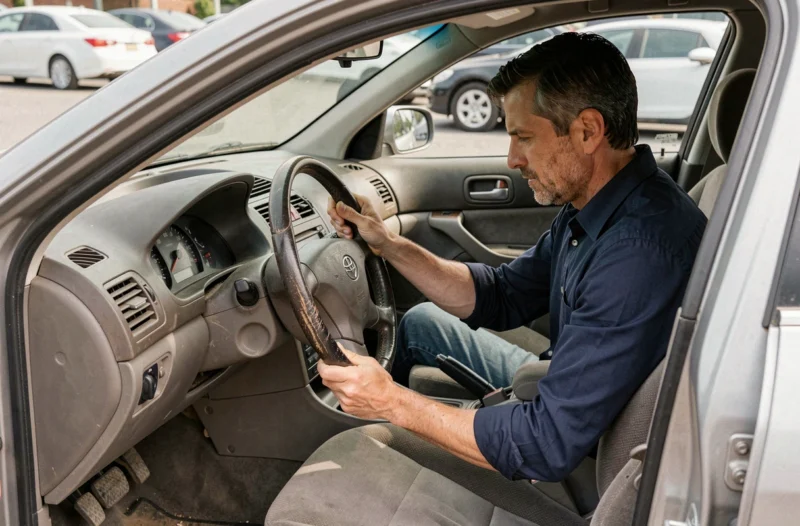
Smooth pedals, a shiny steering wheel, or a sagging driver’s seat on a vehicle advertised with low mileage raise questions. These details can be spotted in high-quality photos. Don’t hesitate to ask for additional pictures if the listing images are blurry or too few.
Used electric cars: a rapidly expanding segment
Sales of used electric cars have significantly increased in recent years. Between 2023 and 2025, they doubled in volume. Models over five years old now reach much more accessible price levels, greatly expanding the online choice.
Buying a used electric vehicle involves an additional check that classic guides overlook: the health of the battery determines the true value of the vehicle. The battery’s capacity degrades over time and with charge cycles. A vehicle whose battery retains only a fraction of its initial capacity will offer reduced daily range.
- Request the battery health certificate (SOH, State of Health), often available through a dealership diagnostic or from an independent specialist.
- Check if the manufacturer’s warranty on the battery is still active, as it generally covers a specific duration or mileage.
- Inquire about the charging history: repeated fast charges accelerate degradation compared to slow home charging.
The low price of an older electric vehicle does not always represent a good deal if battery replacement proves necessary in the short term. A battery diagnostic before purchase is as valuable as a standard mechanical inspection.
Technical inspection and online purchase: what changes in practice
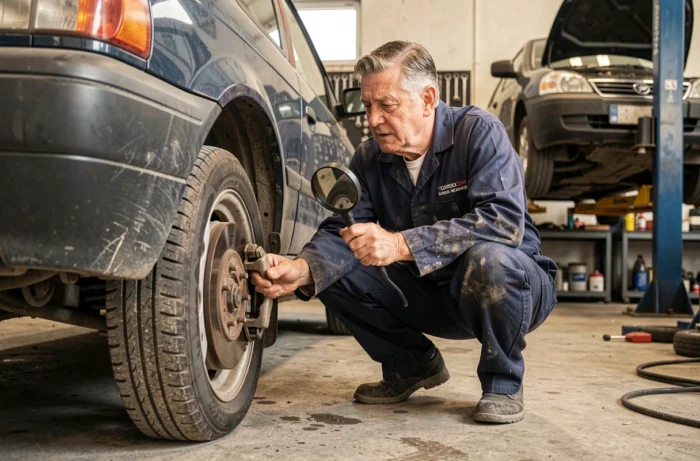
The technical inspection remains mandatory for selling a vehicle over four years old. The seller must provide a report that is less than six months old. When buying online, you may not always see the document before heading out. Request it in advance, via email or through the platform’s messaging system.
A point often overlooked: a vehicle subject to a re-inspection cannot be driven until the repair is completed. For critical safety-related failures, immobilization is automatic. Before booking a trip to pick up a vehicle spotted online, check that the technical inspection is free of re-inspection.
Professional platforms generally display the status of the technical inspection directly on the listing. Private listings are less transparent on this point. If the seller refuses to provide the report, move on.
Warranty and recourse after purchasing a used vehicle
The legal warranty of conformity protects the buyer for a defined period after purchase from a professional. It covers defects that existed before the sale, even if they manifest later. Between private individuals, this warranty does not apply, increasing the risk.
- From a professional, keep the invoice, order form, and any written exchanges to facilitate any potential recourse.
- Between private individuals, draft a detailed sales contract mentioning the mileage, declared condition, and any known defects.
- Specialized platforms sometimes offer additional warranties or pre-purchase inspections, which secure the transaction.
Buying from a professional online offers a more protective legal framework than a transaction between private individuals. The price may be slightly higher, but the safety net in case of hidden defects often justifies the difference.
The online used car market is rapidly structuring itself. Verification tools are multiplying, professional platforms are becoming more transparent, and used electric vehicles are creating a new segment in their own right. Taking the time to cross-reference available data before each purchase remains the best protection against unpleasant surprises.