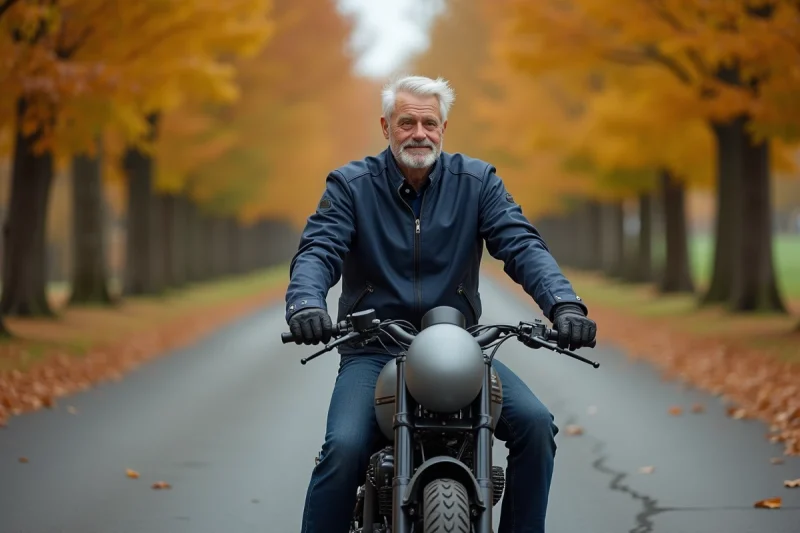
The seat height affects the safety of a senior motorcyclist more than the engine power. A rider who cannot place both feet flat on the ground when stopping on a slope or maneuvering at low speed exposes themselves to a loss of balance that no reflex can correct. We recommend considering this parameter even before consulting the technical specifications.
Seat Height and Center of Gravity: The Two Dimensions That Change Everything
On a motorcycle, the weight stated by the manufacturer doesn’t tell much until we know where the mass is located. Two machines with the same weight can offer radically different sensations depending on the position of the center of gravity. An architecture where the engine is positioned low and slightly forward makes it easier to maintain balance when stopped, to turn around in a parking lot, and to lift the bike after a lateral fall.
A seat height of less than 780 mm is the comfort threshold for most senior riders. Below this height, both feet can touch the ground effortlessly, which eliminates apprehension at red lights or when exiting a gas station. Some models offer scooped seats or adjustable pre-load suspensions, allowing for a few more millimeters to be lost.
Choosing among low and light motorcycles for seniors also requires checking the seat width at the narrowing point. A narrow seat at the front frees the inseam and gives the impression that the motorcycle is lower than it actually is.
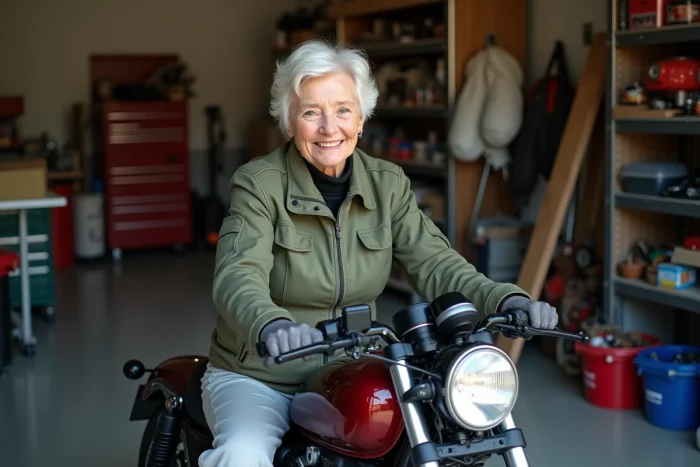
Safety Electronics on Light Motorcycles: ABS and Traction Control
We still see too many articles that pit easy motorcycles against safe ones, as if lightness excluded onboard electronics. Recent entry-level models, including those in the A2 category, now come with standard ABS and traction control. These two aids profoundly change the risk/accessibility trade-off.
ABS shortens the braking distance on wet surfaces and prevents the front wheel from locking, the primary cause of falls in urban areas. Traction control limits rear wheel slip on degraded surfaces or manhole covers. For a rider who rides less regularly, these devices compensate for the gradual loss of reflexes.
- Ensure that the ABS complies with European standards and cannot be deactivated (mandatory on new motorcycles).
- Prefer adjustable traction control with multiple levels, to tailor the intervention to the type of road.
- Make sure that the dashboard clearly indicates the status of each aid, without having to navigate through complex menus.
A senior who resumes riding after several years off does not regain their reflexes in just a few kilometers. Electronics do not replace vigilance, but they forgive occasional mistakes, which changes the game during the first months of getting back on the bike.
Returning to Motorcycling After a Long Break: An Overlooked Use Case
The majority of content addresses the choice of a senior motorcycle as a simple arbitration between categories (trail, roadster, custom). They assume an active rider who has been riding continuously. The case of a retiree getting back on the bike after ten or fifteen years off presents different constraints.
The first reflexes to rebuild involve controlled braking, counter-steering in curves, and managing one’s gaze in turns. A light motorcycle with a smooth low-end engine forgives throttle jerks and late braking. A small displacement twin, for example, delivers its torque progressively and tolerates hesitations.
We recommend planning for at least a half-day refresher course before any purchase. Several organizations offer this type of training on a closed circuit, with bikes provided. The goal is not to perform but to regain muscle memory and identify current limits.
Motorcycle Weight and Lifting Capacity
Raising a motorcycle that has fallen to the ground engages the back, thighs, and arms in a lever movement. Beyond a certain weight, the operation becomes risky for the lower back. A weight of under 180 kg fully fueled allows most seniors to lift the machine alone, using the technique of facing away from the motorcycle with bent legs.
This criterion effectively eliminates large touring bikes and most large displacement adventure trails. It directs towards compact roadsters, small trails, or light customs. The trade-off is less wind protection on the highway, but a senior seeking the pleasure of riding often prefers country roads.
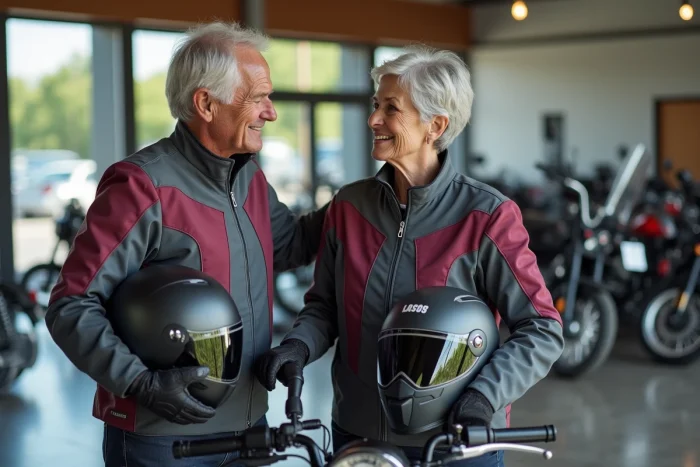
Senior Motorcycle Insurance: How Annual Mileage Affects It
Riding less than a few thousand kilometers per year changes the insurance logic. Some contracts offer a decreasing rate based on declared mileage, which significantly reduces the premium for weekend leisure use.
- Declaring usage as exclusively for leisure (and not for commuting) lowers the premium.
- Choosing a closed garage or an approved SRA anti-theft device offers additional discounts.
- Compare deductibles in case of a solo fall (without third parties): some senior contracts significantly increase them.
The insurance cost of a light small displacement motorcycle is significantly lower than that of a large twin or a touring bike over 1,000 cm³. This factor weighs in the annual budget of a retiree who rides for pleasure.
The choice of a motorcycle in retirement is not limited to a category. The combination of low seat height, manageable weight, modern safety electronics, and an insurance contract suited to low mileage forms a coherent whole. Testing several machines in a parking lot before buying, simulating a full turn and a stop on a slope, remains the best selection filter.