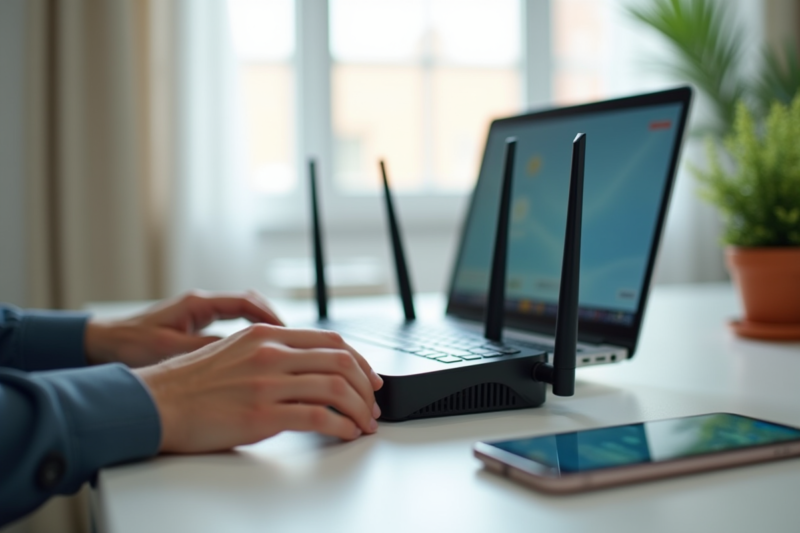
Creating an efficient local network is essential for the performance and security of your digital environment, whether at home or in the office. A simplified setup optimizes connectivity between different devices while minimizing security risks.
To achieve this, you need to follow certain key steps. First, choose a router that suits your needs in terms of range and speed. Configure security settings, such as WPA3 encryption and a strong password. Ensure good organization of cables and access points to maximize coverage and reliability of the network. These measures will guarantee a high-performing and secure local network.
The essential steps to set up your local network
Setting up a local network is not something to improvise. Here are the steps to follow for an effective and secure setup.
Choose and configure your router
The router is the cornerstone of your local network. Select a model that meets your needs in terms of range and throughput. Access the configuration interface via the address 192.168.1.1. Modify basic settings such as the SSID and WiFi password to secure access to your network.
- Access the configuration interface: 192.168.1.1
- Change the SSID and WiFi password
- Enable WPA3 encryption for better security
Optimize your network topology
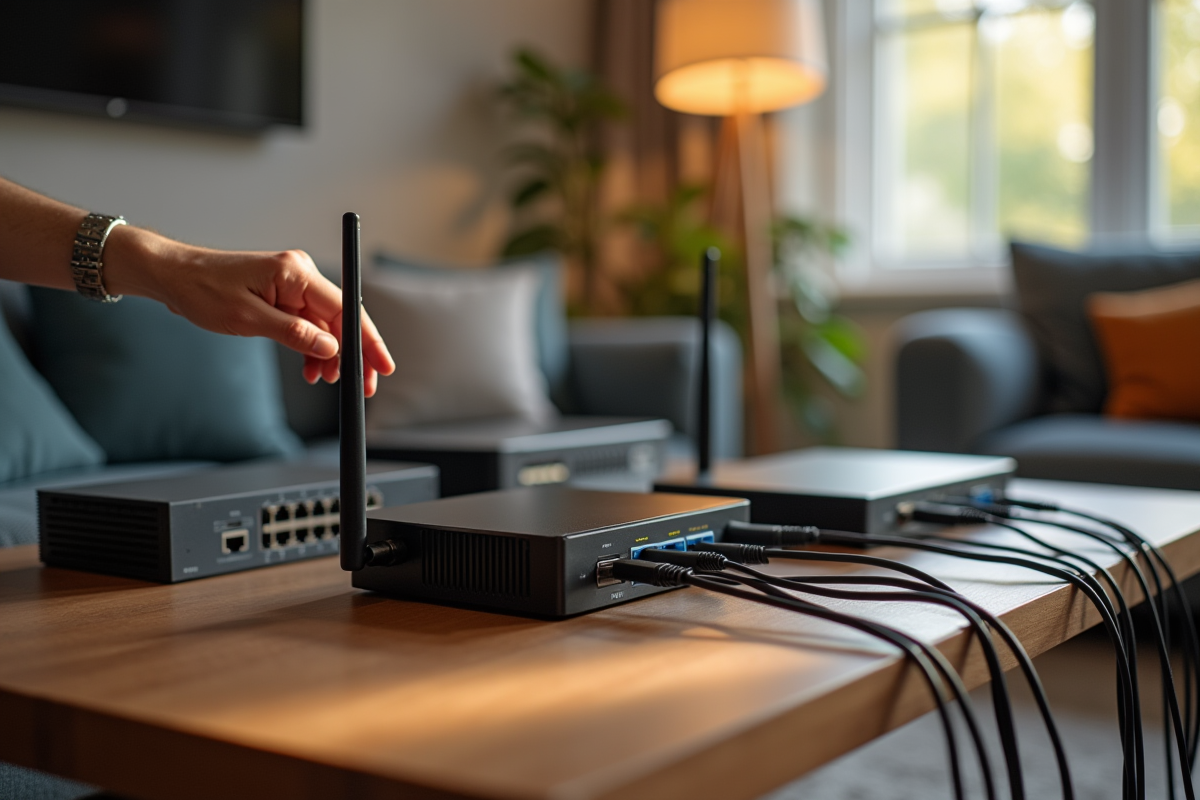
Good organization of cables and access points is essential to maximize coverage and reliability of the network. Use Ethernet cables to connect devices that require a stable and fast connection. Place repeaters or powerline adapters to extend the WiFi signal range, especially in large homes or offices.
- Use Ethernet cables for critical connections
- Install repeaters or powerline adapters to extend WiFi coverage
Configure advanced network settings
For optimal management, configure advanced settings such as the DHCP server, which automatically assigns IP addresses to connected devices. Enable a firewall to protect your network from unauthorized access. For advanced users, consider using a VPN to secure remote access and an IDS/IPS to detect and prevent intrusions.
- Configure the DHCP server for automatic IP address assignment
- Enable a firewall to protect your network
- Consider using a VPN and an IDS/IPS
Tips to optimize and secure your network
Manage bandwidth intelligently
To avoid congestion and slowdowns, use bandwidth management tools. Prioritize critical applications such as video conferencing or streaming. Consider implementing Quality of Service (QoS) on your router to assign priorities to different types of traffic.
- Enable QoS to prioritize critical applications
- Monitor bandwidth usage
Secure your wireless connections
The security of your WiFi network is paramount. Change your password regularly and use a strong encryption protocol like WPA3. Disable SSID broadcasting to make your network less visible to potential intruders. Regularly update your router’s firmware to fix vulnerabilities.
- Use WPA3 for encryption
- Change the WiFi password regularly
- Disable SSID broadcasting
Use static IP addresses for critical devices
Assign static IP addresses to essential devices like servers and printers. This ensures a stable connection and facilitates network management. Manually configure the IP addresses in your router’s settings or directly on the devices concerned.
- Assign static IP addresses to servers and printers
- Manually configure IP addresses
Implement advanced security solutions
For enhanced security, use a robust firewall and enable an intrusion detection and prevention system (IDS/IPS). Consider using a VPN to secure remote access. Maintain constant vigilance on network logs to detect any suspicious activity.
- Enable a firewall and an IDS/IPS
- Use a VPN for remote access
- Monitor network logs