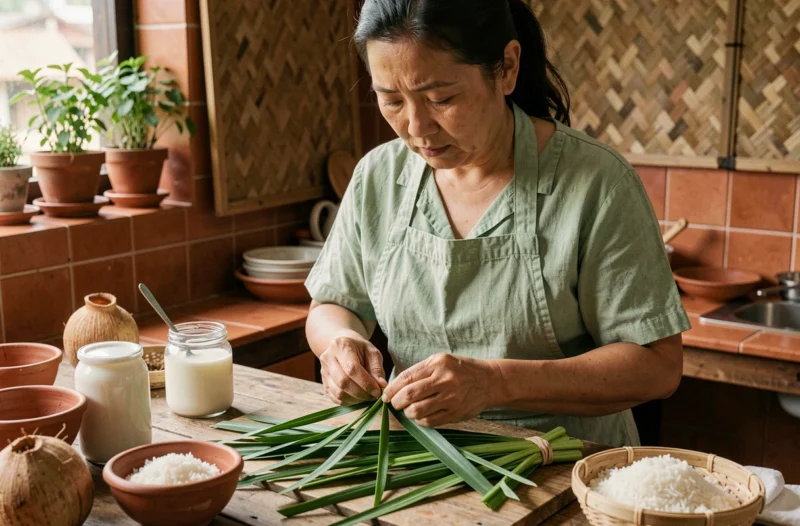
When you open a packet of frozen pandan leaves for the first time, the aroma that wafts out is surprising: vegetal notes, almost almond-like, with a warm base reminiscent of vanilla. This aromatic signature comes notably from 2-acetyl-1-pyrroline, a molecule also found in basmati rice and jasmine rice. Knowing how to harness this fragrance in cooking requires a few simple reflexes, though they are not always intuitive.
The volatile molecule of pandan and its implications in cooking
Most recipe guides suggest throwing pandan leaves into a preparation at the beginning of cooking. The problem is that 2-acetyl-1-pyrroline is a volatile compound: the longer the heat is applied, the more the fragrance evaporates.
For long preparations (steamed rice, chicken broth), you can tie two or three leaves in a knot and add them at the beginning of cooking, because the surrounding liquid captures some of the aromas. However, for a cream, cake batter, or flavored coconut milk, adding pandan extract or juice at the end of preparation significantly limits the loss of aroma.
Specifically, when preparing pandan syrup for cold drinks, you heat the water and sugar, then remove it from the heat before infusing the crumpled leaves for about ten minutes under a lid. The result: the color remains vibrant and the fragrance is much more pronounced than with prolonged boiling.
For those who wish to use pandan leaves in cooking more extensively, the fresh juice obtained from a blender is the most aromatic form. You blend the leaves with a bit of water, strain, and you get an intense green liquid that colors and flavors without any additives.
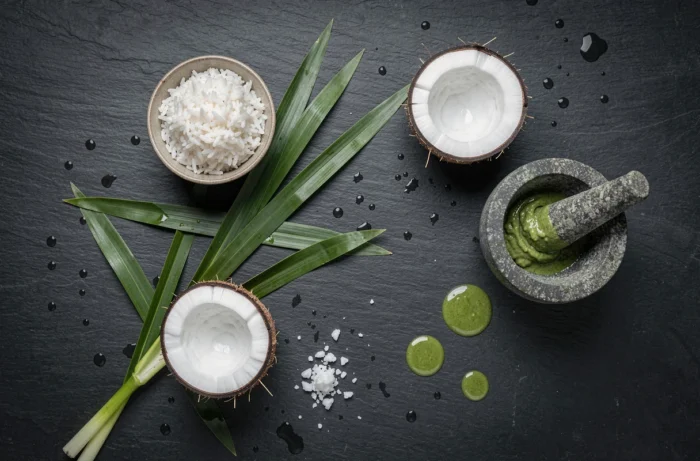
Fresh juice, powder, extract: which form of pandan to choose according to the recipe
Not all forms of pandan are equal. The choice depends on the type of preparation and the desired final texture.
- Fresh pandan juice is suitable for cake batters (chiffon cake, pancakes) and creams where the natural green color is part of the result. It adds moisture and fragrance but does not keep well beyond a few hours in the refrigerator.
- Pandan powder offers a longer shelf life, provided it is stored in an airtight container, away from light and heat. It can be incorporated into dry batters, pancake mixes, or hot drinks. Its fragrance is more subtle than that of fresh juice.
- Concentrated liquid extract works well for non-alcoholic cocktails, coconut milk lattes, or glazes. A few drops are sufficient, but quality varies greatly from brand to brand: some extracts contain artificial colorings that have nothing to do with the original leaf.
- Whole leaves (fresh or frozen) remain the most versatile format. You can tie them to flavor rice, crumple them for an infusion, or blend them for juice.
Feedback varies on the amount of powder to use to replace fresh juice, as the concentration differs among suppliers. Testing a small dose and adjusting remains the most reliable method.
Pandan leaves in savory dishes: chicken, rice, and broths
Pandan is often associated with desserts, but its savory applications deserve attention. In Thailand and Malaysia, chicken wrapped in pandan leaves before frying is a street food classic. The leaf protects the meat from direct heat, keeps the juices inside, and imparts a subtle fragrance to the skin.
The technique is simple: marinate pieces of chicken (preferably boneless thighs) in a mixture of soy sauce, garlic, white pepper, and a bit of starch, then wrap each piece in a tied pandan leaf. Cooking can be done by frying or baking.
For rice, the most common gesture is to slip a knot of leaves into the rice cooker or pot. The fragrance permeates the grains during steaming, and the rice takes on a slight greenish hue with a taste of green vanilla. You can also prepare rice with coconut milk and pandan, served alongside curries or grilled dishes.
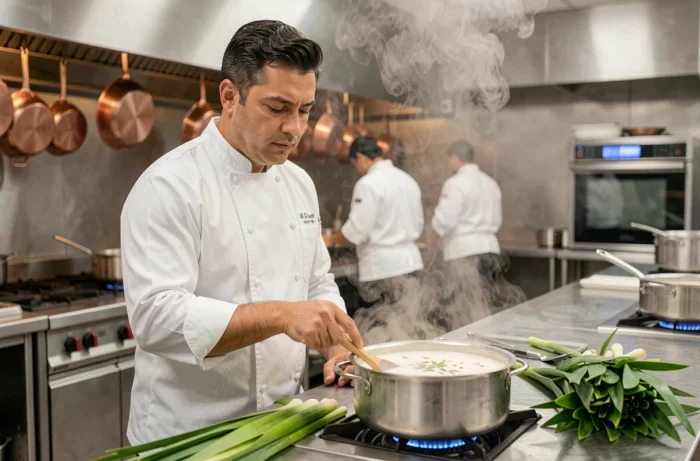
Desserts and drinks with pandan: recipes that work in France
Pandan chiffon cake remains the most popular recipe to test this flavor in pastry. The batter incorporates fresh pandan juice, coconut milk, and whipped egg whites. The airy texture allows the fragrance to stand out without being masked by butter or chocolate.
In a quicker version, pandan pancakes yield a visually spectacular result: a natural green color without coloring, and a taste that radically differs from the classic pancake. You simply replace part of the milk in the recipe with filtered pandan juice.
Cold and hot drinks with pandan
Pandan latte has gained visibility in recent years. You mix milk (plant-based or not), homemade pandan syrup, and ice. The combination of pandan and coconut milk works particularly well, as both share rich and sweet notes that balance each other.
In a hot version, you can infuse pandan leaves in simmering water to obtain a slightly sweet herbal tea, without added sugar. Served with a hint of fresh ginger, this infusion provides an original alternative to green tea.
Supply of fresh pandan leaves: what you need to know
In France, fresh pandan leaves remain an irregularly available product. Arrivals depend on specialized import circuits, and the regularity is not comparable to that of frozen or powdered pandan. Asian grocery stores in major cities are the most reliable source.
One often overlooked point: bringing pandan leaves back in your luggage from a non-EU country poses a regulatory problem. Since December 2019, plants entering the European Union must be accompanied by a phytosanitary certificate, and pandan leaves are not among the exemptions. Buying from an established business within the EU remains the simplest route.
Frozen pandan represents the best compromise between practicality and aromatic quality. The leaves freeze well and retain most of their fragrance for several months, provided they are kept in an airtight bag.