
Tuya Smart is an IoT platform that provides manufacturers with a software foundation to make their connected devices controllable from a mobile app. The end user finds under the Tuya Smart app (or Smart Life, its clone) bulbs, plugs, sensors, and cameras from very different brands. The question of cost arises as soon as one exceeds basic usage, as several levels of service coexist without a clear boundary between free and paid.
Tuya Cloud, IoT integration, and consumer application: three distinct billing scopes
The most common confusion is thinking that Tuya charges for access to its mobile app. The Tuya Smart app remains downloadable and usable without a subscription to control devices, create simple scenarios, and launch voice commands via Alexa or Google Home.
What can become paid is access to the cloud services of the IoT platform. This aspect mainly concerns developers, integrators, and users who connect Tuya to a third-party home automation system. Tuya’s IoT platform offers a limited-time free trial, after which certain API and cloud synchronization functions require a subscription.
As detailed in the analysis on Tuya Smart on 16h20, this distinction between the free app and paid cloud services is poorly explained by Tuya itself, which fuels user frustration when discovering a trial expiration message without understanding what it covers.
A third scope exists: some manufacturers integrate premium features (cloud video storage for cameras, extended consumption histories) into their Tuya devices that require a manufacturer-specific subscription, separate from Tuya.
Free features of Tuya Smart: what remains accessible without payment
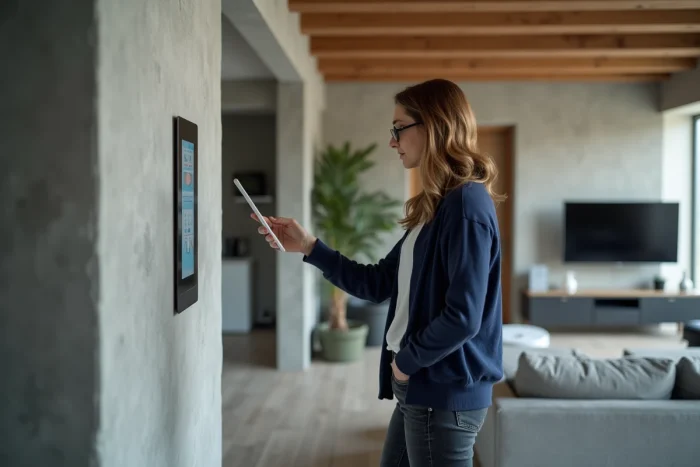
For standard home use, the Tuya Smart app covers most needs without spending anything.
- Remote control of all compatible devices (plugs, bulbs, sensors, blinds) works via Tuya cloud without a subscription, including from outside the home
- Basic automations (turning on a plug at a fixed time, triggering a scenario when a sensor detects motion) are included in the app’s free offering
- Compatibility with voice assistants Alexa and Google Home requires no additional payment on Tuya’s side
- Access sharing among household members remains free
The free app is sufficient to control a medium-sized connected home. The limit appears when trying to extract data, connect Tuya to a local home automation server, or utilize advanced APIs.
Local integration with Home Assistant: the alternative that changes the business model
The real lever to avoid any recurring costs related to Tuya is not to change apps, but to reduce dependence on the manufacturer’s cloud. Home Assistant, an open-source home automation platform, allows control of Tuya devices locally or via a free native cloud integration.
Home Assistant and Tuya cloud integration
Home Assistant offers an official integration with Tuya that uses the cloud API. This method requires creating an account on Tuya’s IoT platform, but the volume of API calls allowed for free largely covers typical home usage. The problem arises when Tuya modifies its access conditions or imposes a switch to a paid plan after a trial period, as several users have reported.
Local control via Zigbee or alternative firmware
Some Tuya devices use the Zigbee protocol, allowing them to be integrated directly into Home Assistant via a Zigbee coordinator (USB key type Sonoff or ConBee) without going through Tuya cloud. Control then becomes entirely local: no more dependence on servers, no more risk of future subscriptions.
For Tuya devices using Wi-Fi, alternative firmwares like Tasmota or ESPHome allow replacing the original software and removing all communication with the cloud. This operation requires technical skills (flashing the microcontroller) and voids the warranty, but it offers complete and permanent local control without any recurring costs.

Risk of technical migration after changing Tuya infrastructure
One aspect rarely anticipated concerns the stability of access conditions over time. Tuya has already changed its integration mode, forcing Home Assistant users to migrate to a new authentication system. This migration led to the appearance of trial expiration messages for accounts that had previously worked for free.
This type of unilateral change poses a concrete problem: an ecosystem that works for free today can become paid tomorrow without any modification on the user side. The risk is proportional to the number of devices connected to Tuya cloud. The larger the fleet, the more costly the migration to a local solution becomes in terms of time.
Anticipating this risk means prioritizing from the start devices compatible with Zigbee or flashable, rather than models exclusively tied to Tuya cloud via Wi-Fi.
Tuya paid or free: the determining criterion remains the level of dependence on the cloud
For a household that is satisfied with the Tuya Smart mobile app with a few connected devices, no payment is required. The app remains free and functional for daily control, scenarios, and compatibility with Alexa or Google Home.
Costs appear when the user goes beyond the app’s scope: advanced home automation integration, API access, cloud storage for cameras. At this point, the choice boils down to paying Tuya or investing time in a local infrastructure.
Tuya devices compatible with Zigbee offer the best flexibility, as they work with both the Tuya app and Home Assistant locally. This dual compatibility protects against future pricing changes on the platform while maintaining one of the largest catalogs of connected objects on the market.