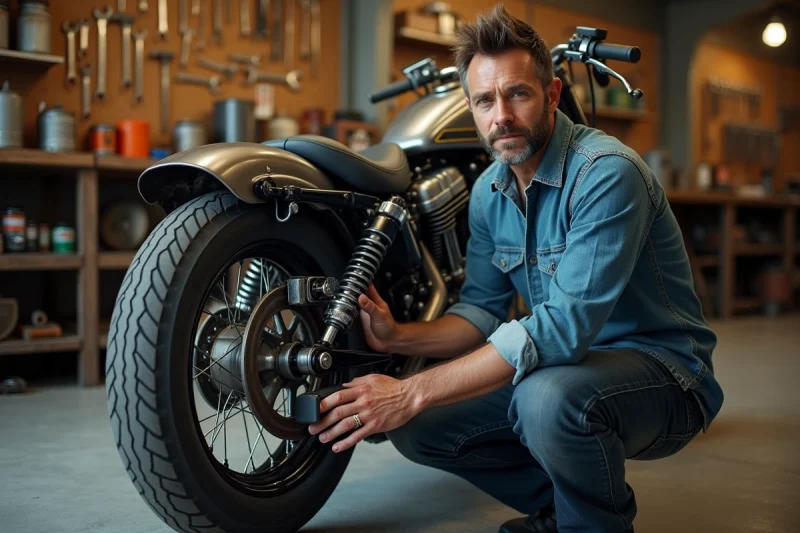
The debate about the reliability of Harley Davidson engines keeps resurfacing on forums, with often contradictory opinions depending on mileage, production year, and type of use. Three engine blocks concentrate the majority of positive feedback from enthusiasts: the Evolution, the Twin Cam 96 post-2007, and the Milwaukee-Eight. Their performance varies significantly based on usage conditions, and that is precisely what we will detail.
Harley engine reliability in extreme climates: intense cold and desert heat
English and French forums discuss reliability from a moderate perspective, rarely going beyond the range of 5-35 °C. User feedback in extreme conditions tells a different story.
In intense cold, the air-cooled Twin Cam 96 suffers from condensation cycles in the crankcase. The oil absorbs ambient moisture during repeated starts at low temperatures, which accelerates wear on the crankshaft bearings. The Evolution, with its simpler design and wider mechanical tolerances, handles these thermal stresses better. Quebec owners from the Harley Davidson Quebec group confirm that Evo engines restart more easily after prolonged winter storage.
In desert heat, the problem reverses. Air cooling alone, characteristic of the Evolution and early Twin Cam models, reaches its limits above 40 °C when riding at low speeds. The Milwaukee-Eight 107 and 114 with oil-cooled heads manage these situations much better. The introduction of Euro 5+ standards has also pushed Harley to enhance the cooling systems on Revolution Max engines, improving their longevity in intensive use.
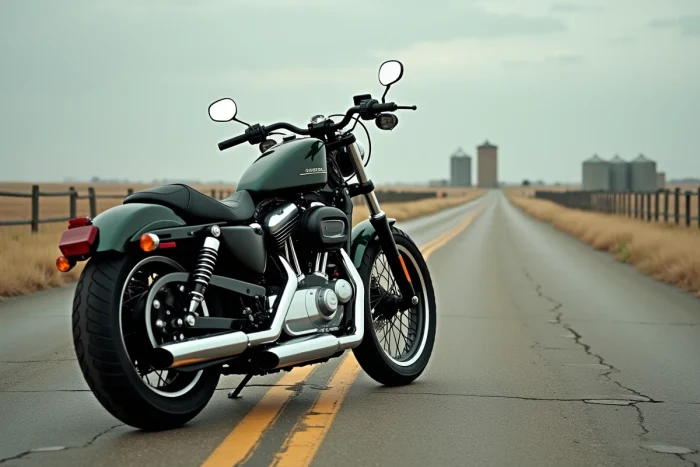
To identify the most reliable Harley Davidson engine for your usage context, the question of climate and riding profile weighs as heavily as the general reputation of the engine block.
Twin Cam 96 post-2007: the most reliable Harley engine at high mileage
We observe a growing consensus among independent mechanics: the post-2007 Twin Cam 96 with hybrid spring tensioner surpasses the Evolution in reliability beyond 100,000 km. This statement contradicts the historical reputation of the Evo, but it is based on precise mechanical observations.
The early Twin Cam models (1999-2006) had a design flaw in the timing chain tensioner, made of plastic pads that wore out prematurely. Harley corrected this in subsequent models with a hybrid spring/hydraulic system. This modification transformed the longevity of the engine block.
The Twin Cam 96 develops 1584 cm³ and benefits from a generous low-end torque that avoids over-revving the engine. On the Dyna and Touring models (Road King, Street Glide, Electra Glide), this engine racks up miles with standard maintenance:
- Oil change every 8,000 km with 20W-50 oil suitable for air-cooled V-twins, adhering to intervals even with low usage
- Check the timing chain tensioner at each major service, ensuring no excessive play on the pad
- Replace rocker cover gaskets as soon as seepage appears, a recurring but benign weak point on this block
The 1450 Twin Cam 88, often offered used at attractive prices, remains a good engine once the tensioner is replaced with a roller bearing kit. However, the 96 post-2007 eliminates this intervention from the factory.
Milwaukee-Eight 117: improving reliability and refined electronic management
The Milwaukee-Eight represents the current generation of Harley Big Twins. Among its variants (107, 114, 117), the M8 117 shows a clear trend towards improved reliability since 2023, thanks to revisions of the injectors and engine mapping.
The early M8 107 models (2017-2019) experienced overheating issues with the rear cylinder in slow urban traffic, a legacy of air cooling. Harley has gradually integrated partial liquid cooling of the cylinder heads, which resolved the problem in the 114 and 117 versions.
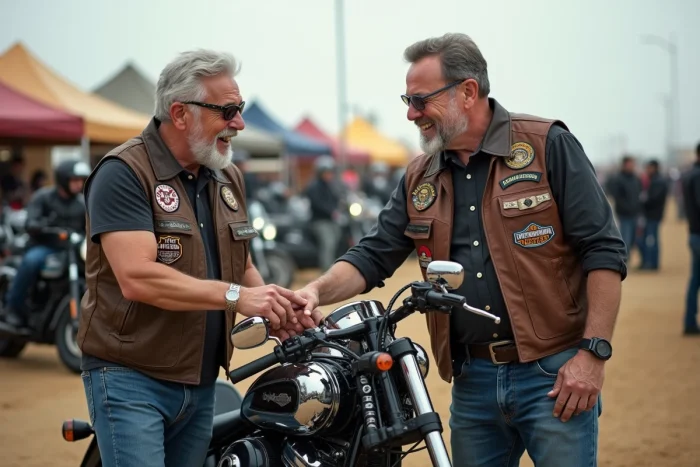
The 117 cubic inches pushes the displacement to its maximum on the Softail and Touring platforms. Feedback on specialized forums (notably HDForums) reports a notable decrease in overheating-related failures in recent models. The finer electronic management also allows for better air/fuel ratio adjustments based on altitude and ambient temperature, a direct advantage in varied climatic conditions.
Evolution 1340: does the legend still deserve its reputation?
The Evolution (1984-1999) remains the engine that purists spontaneously cite as the most reliable. Its simple mechanical design, without a timing chain (gear-driven), eliminates a major source of failure. The block tolerates maintenance lapses that the Twin Cam and Milwaukee-Eight do not forgive.
However, we recommend tempering this reputation. An Evo in good mechanical condition today is at least 25 years old. The reliability of the block does not compensate for the wear of the peripherals: wiring harness, voltage regulator, starter, primary cover gaskets. On a used purchase, the cost of upgrading these elements can exceed the value of the engine alone.
The Evo remains a relevant choice for recreational use at moderate mileage, in a temperate climate, with an owner willing to maintain their machine themselves. For daily or long-distance use, the post-2007 Twin Cam 96 offers a better compromise of reliability/comfort/availability of parts.
Which Harley engine to choose based on your actual use
The choice of engine depends less on online reputation than on three concrete parameters: the expected annual mileage, the dominant climate, and tolerance for preventive maintenance.
- Urban use in hot climates: the Milwaukee-Eight 114 or 117 with oil-cooled heads manages heat effortlessly, where the Evo and Twin Cam struggle at low speeds
- Long-distance touring in temperate climates: the post-2007 Twin Cam 96 on the Touring platform (Street Glide, Road Glide) combines proven reliability with controlled maintenance costs
- Occasional use, pleasure mechanics: the Evolution 1340 on Softail or Dyna remains an endearing machine, provided one accepts the maintenance of aging peripherals
The most reliable Harley engine does not exist in absolute terms: it depends on the match between the block, its model year, and the actual usage conditions. A well-maintained 2008 Twin Cam 96 on a Road King will last longer than a neglected Milwaukee-Eight 117. The consistency of maintenance remains the primary factor for longevity, regardless of the chosen engine.